
Student Work & Inquiry
At Waterford Ridge School, students engage in extended work in reading, writing, mathematics, and scientific inquiry. They analyze texts, construct arguments, solve complex problems, and apply knowledge across disciplines.
You will see:
Analytical writing supported by evidence
Mathematical reasoning and problem solving
Scientific investigation and experimentation
Research projects integrating multiple disciplines
Selected student work from my teaching experience. Examples include work from early childhood through upper elementary to illustrate developmental progression. At Waterford Ridge, students are currently served through Grade 2.
Research & Writing
Students engage in research projects that integrate reading, writing, and critical thinking. They learn to gather information, organize ideas, and communicate their understanding through both written and visual formats.
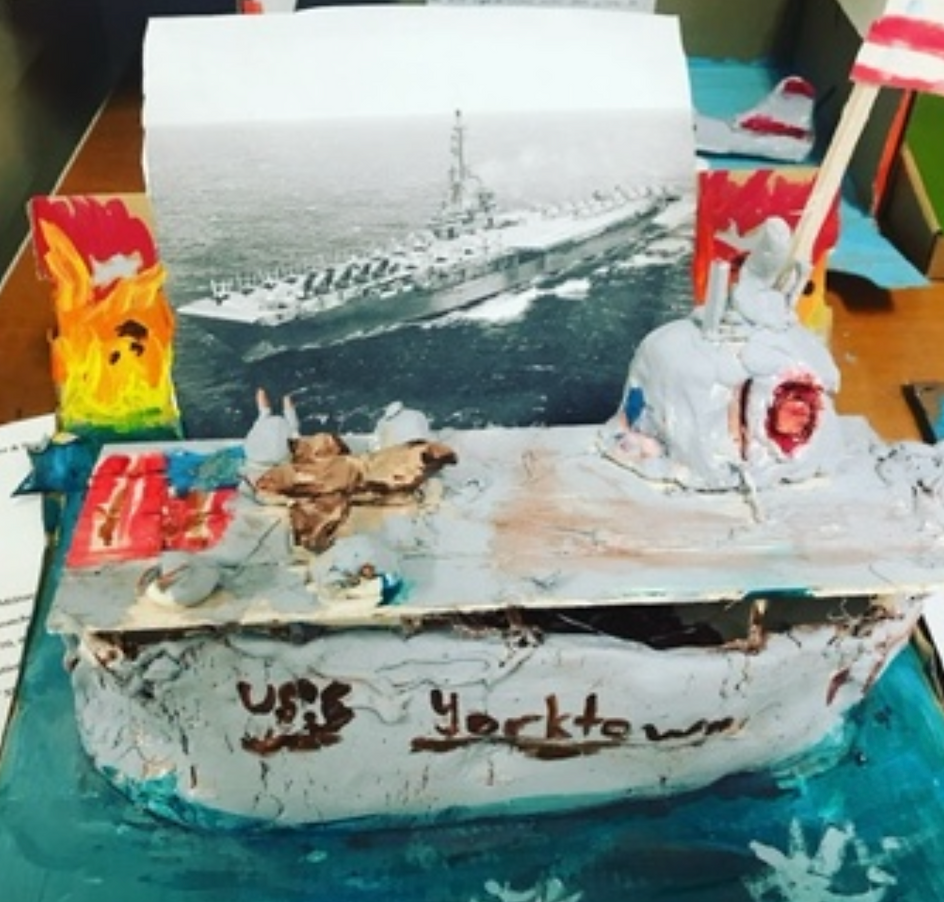
Student-designed model of the USS Yorktown, demonstrating historical understanding through spatial representation and written analysis.
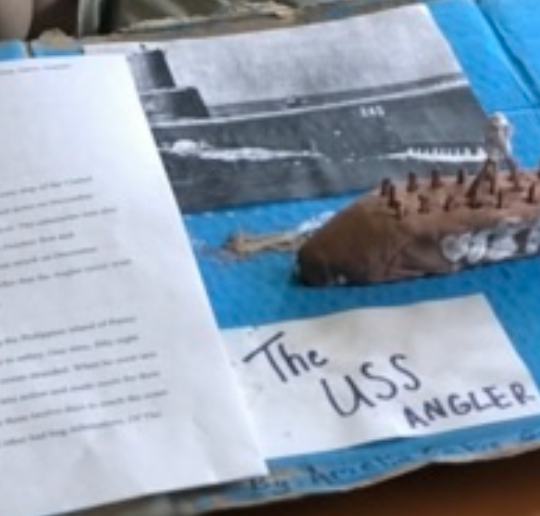
Independent research project on submarine design, combining informational writing with a 3D model to illustrate structure, function, and purpose for upper elementary project.
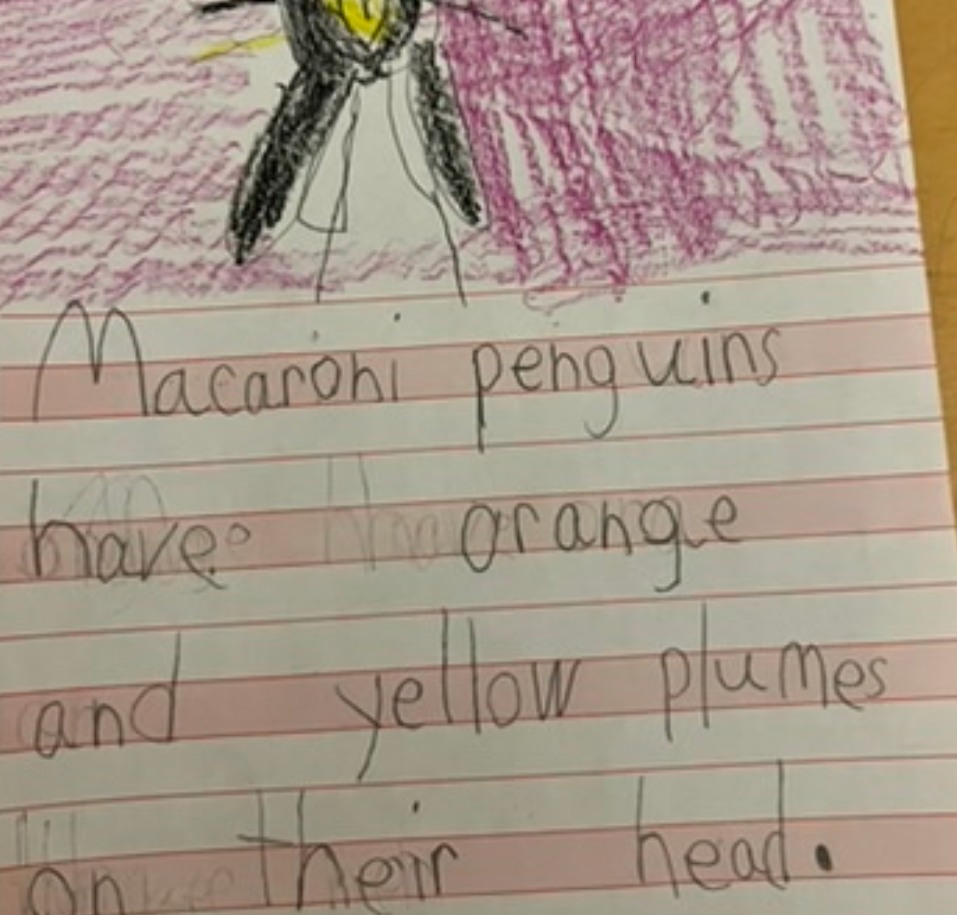
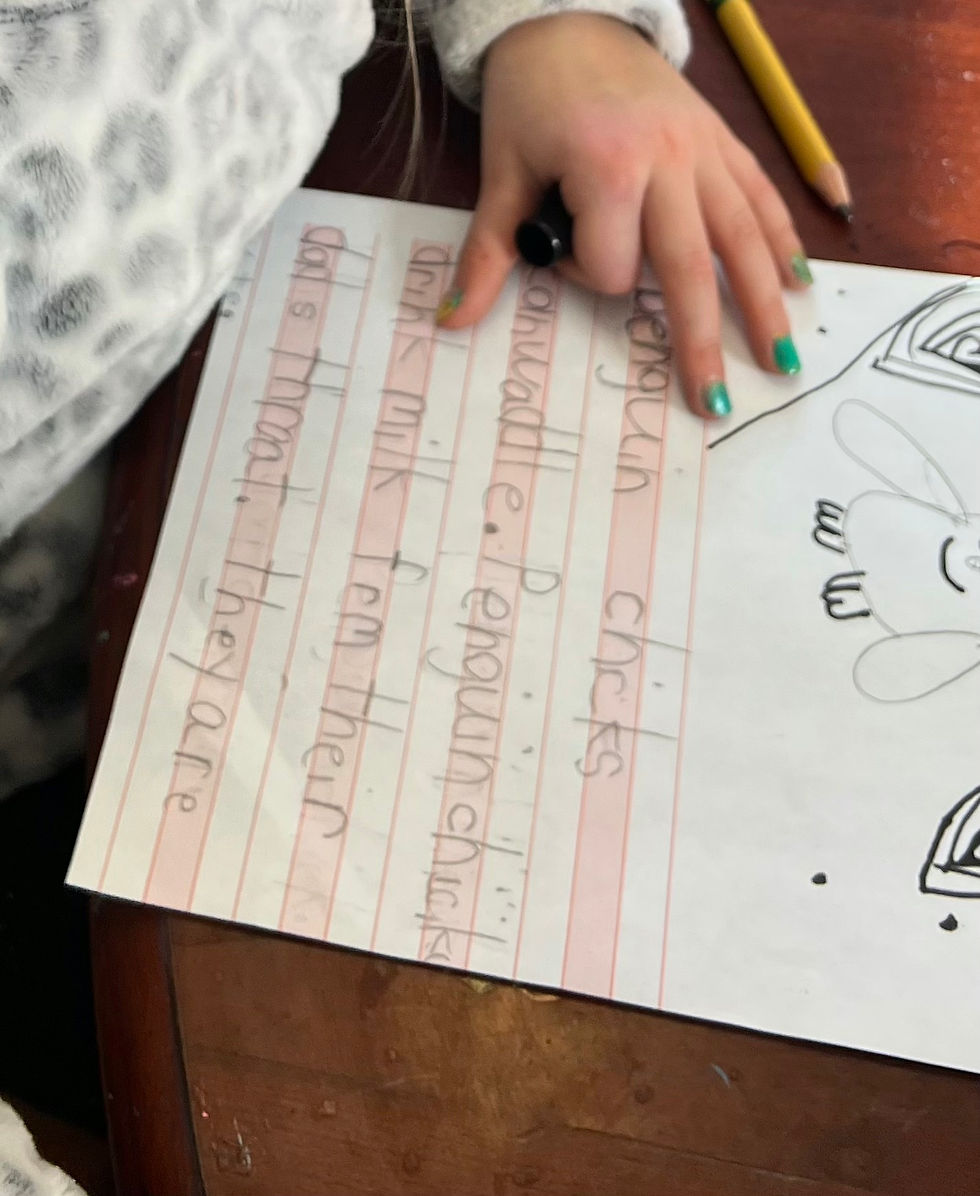
PK4 student producing informational writing to describe animal characteristics, demonstrating emerging sentence structure, phonetic spelling, and the ability to communicate knowledge independently
Integrated Projects
Students apply their knowledge through multi-step projects that combine disciplines. These experiences require planning, revision, and sustained attention, resulting in meaningful, high-quality work.


First grade student composing a persuasive letter describing an original invention, demonstrating extended writing, organization of ideas, and audience awareness
5th grade elementary students synthesize historical information through research and writing, creating newspapers that present global events from a chosen perspective, developing understanding of bias, audience, and interpretation
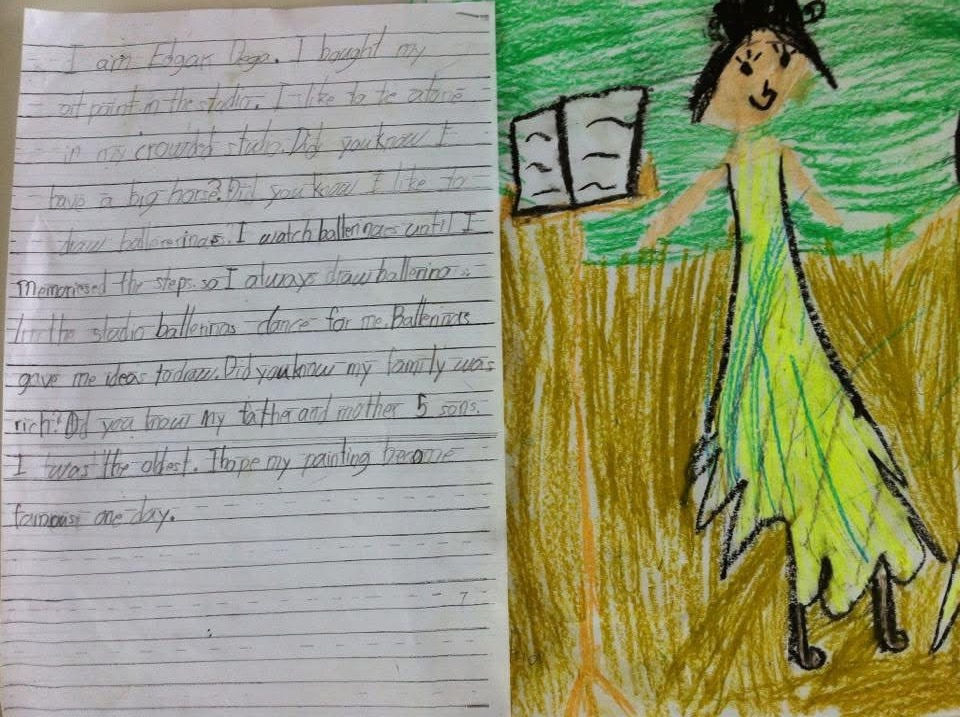
First grade student writing connected paragraphs about Edgar Degas, integrating art history knowledge with written expression.
Mathematics & Problem Solving
Mathematics and science are approached as disciplines of reasoning and discovery.
Students:
Engage with hands-on materials and abstract problem solving
Test hypotheses and analyze results
Apply concepts to real-world situations
Develop persistence through challenging work
The goal is deep understanding and flexible thinking.
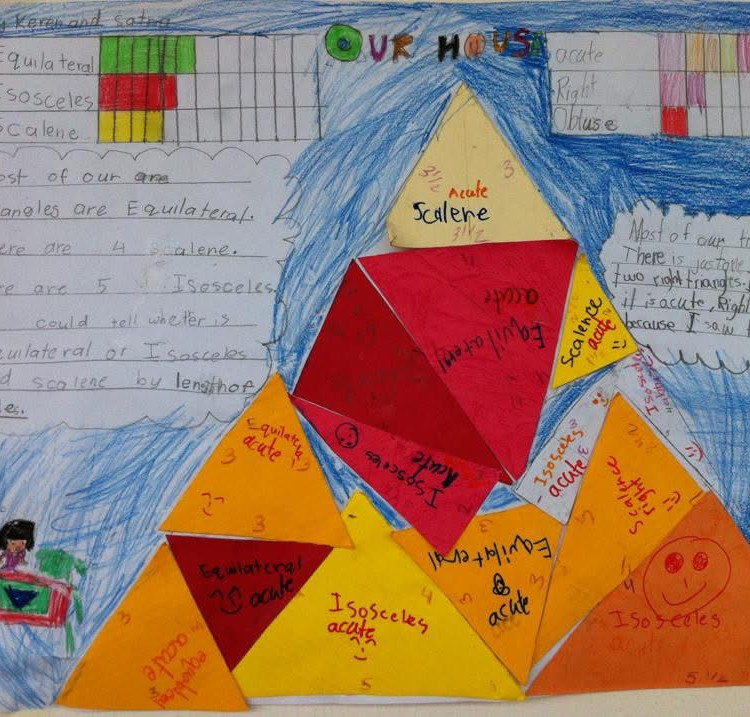

Lower elementary student explores geometry by classifying triangles and explaining their thinking through writing, models, and visual representation.
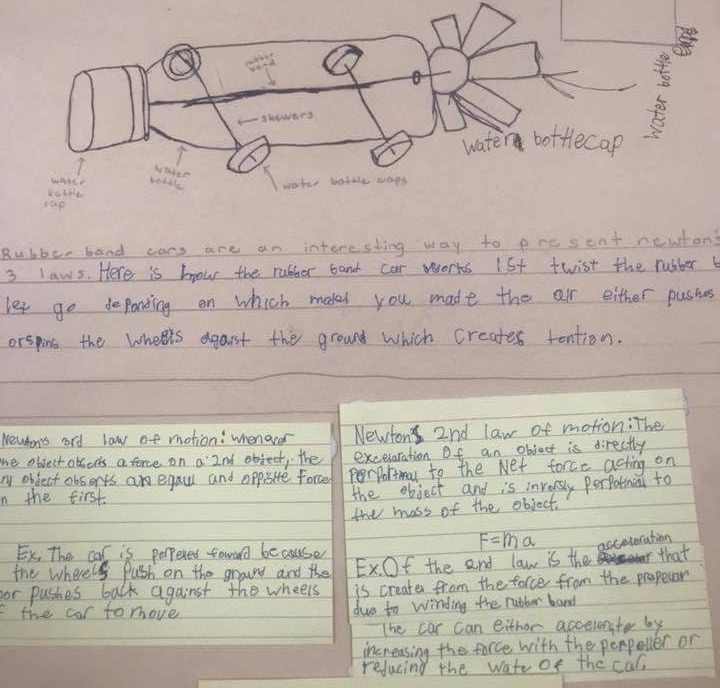
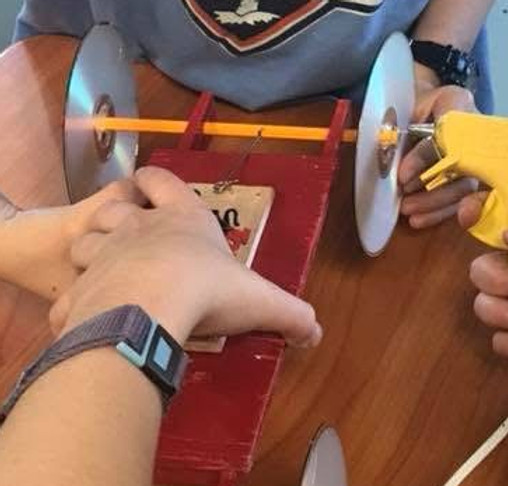
Students design and test rubber band–powered cars, applying concepts of force, motion, and energy.
Students research watersheds and create informational posters to explain their importance and how to protect them.
Writing as a Tool for Thinking
Writing is central to the academic program. Students write across all subjects to clarify ideas, analyze information, and communicate their understanding.
Examples of student writing include:
Literary analysis and text-based responses
Historical essays and primary source analysis
Research reports and informational writing
Persuasive and argumentative pieces
Students are expected to support their ideas with evidence, revise their work, and communicate clearly.
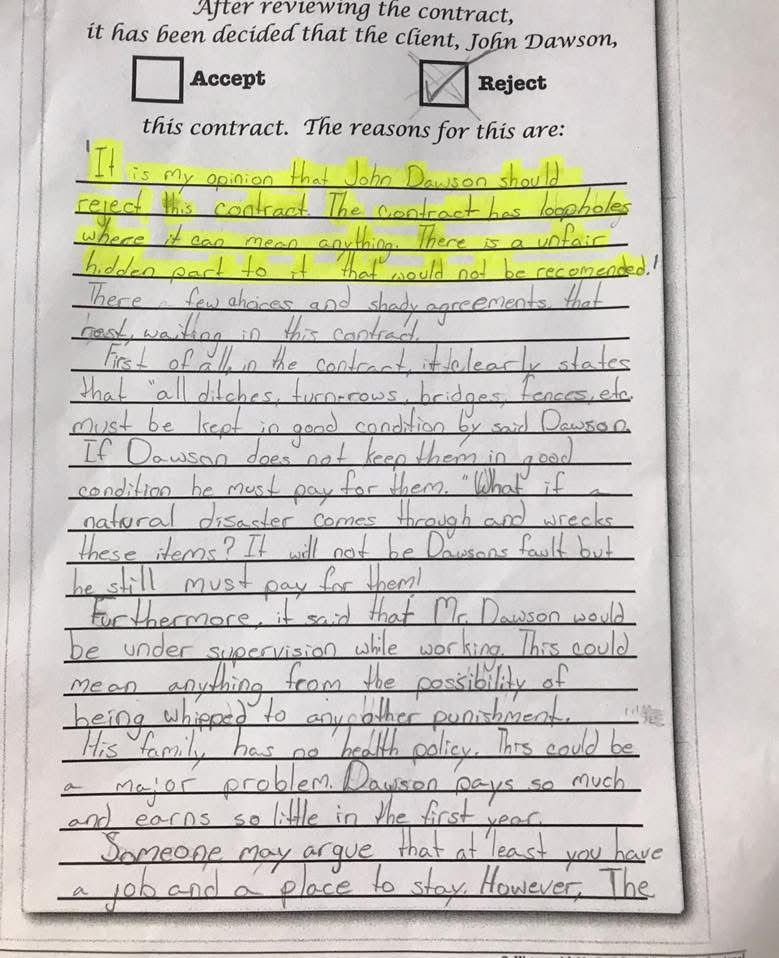
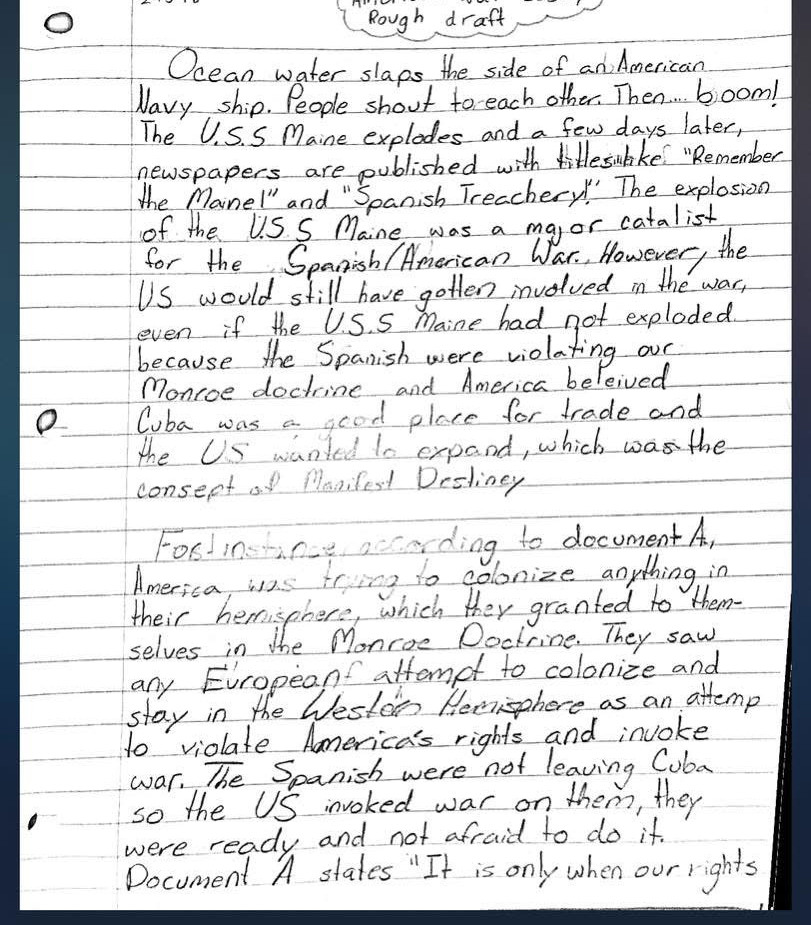
5th grade student evaluates a primary source contract document from the Reconstruction era, identifying ambiguity, bias, and risk while constructing persuasive, evidence-based argument.
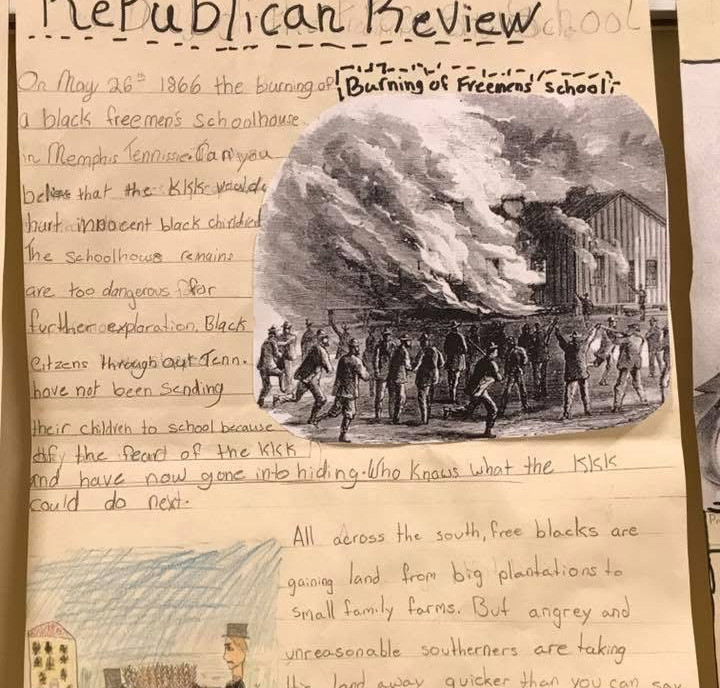
Upper elementary students synthesize research into a "newspaper" to explore bias and narrative.
5th grade student analyze historical events using primary and secondary sources, constructing evidence-based arguments about cause, perspective, and national interest.
Inquiry-Based Learning
Students explore complex topics through guided inquiry and research. Rather than receiving information passively, they learn to ask questions, evaluate sources, and construct understanding.
Projects may include:
Environmental science investigations
Historical research and perspective-taking
Engineering challenges and design projects
Integrated studies across subjects
This approach develops curiosity, independence, and intellectual ownership.
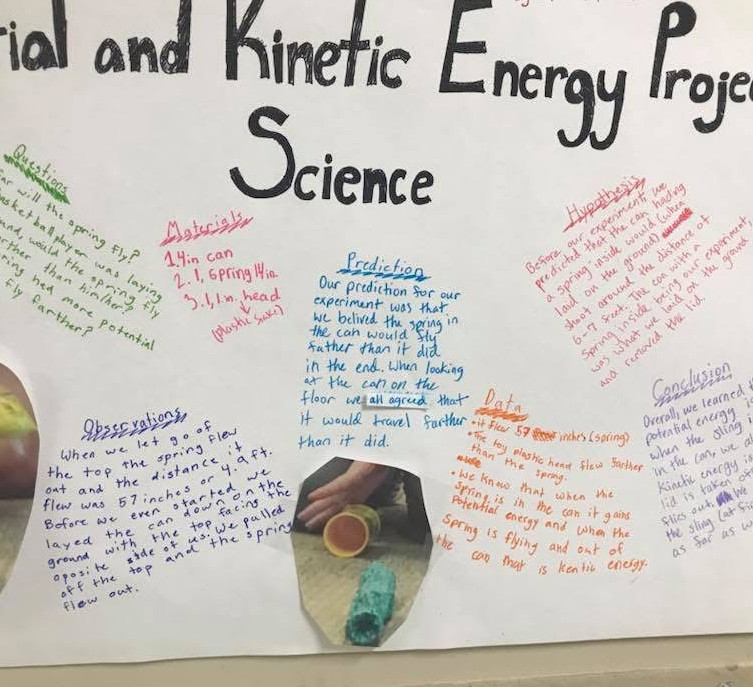

Upper elementary students test hypotheses and analyze results, connecting hands-on experimentation with scientific concepts.
Students design, build, and test solutions through hands-on problem solving
First grade student engages in independent research for his art history project.
Inquiry-Based Learning
Students explore complex topics through guided inquiry and research. Rather than receiving information passively, they learn to ask questions, evaluate sources, and construct understanding.
Projects may include:
Environmental science investigations
Historical research and perspective-taking
Engineering challenges and design projects
Integrated studies across subjects
This approach develops curiosity, independence, and intellectual ownership.
Process and Growth
Student work develops over time.
Children learn to:
Revisit and improve their work
Respond to feedback
Stay with challenging tasks
Take pride in completing meaningful work
This process supports both academic growth and independence.
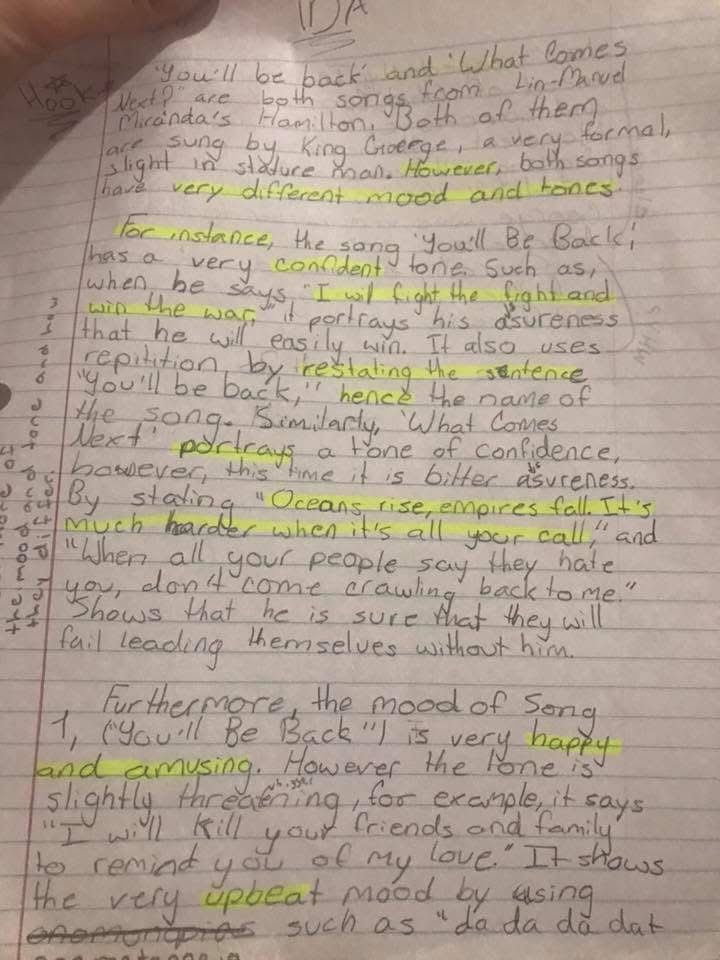
Upper elementary student examines tone, voice, and rhetorical strategies, supporting her interpretations with direct textual evidence.
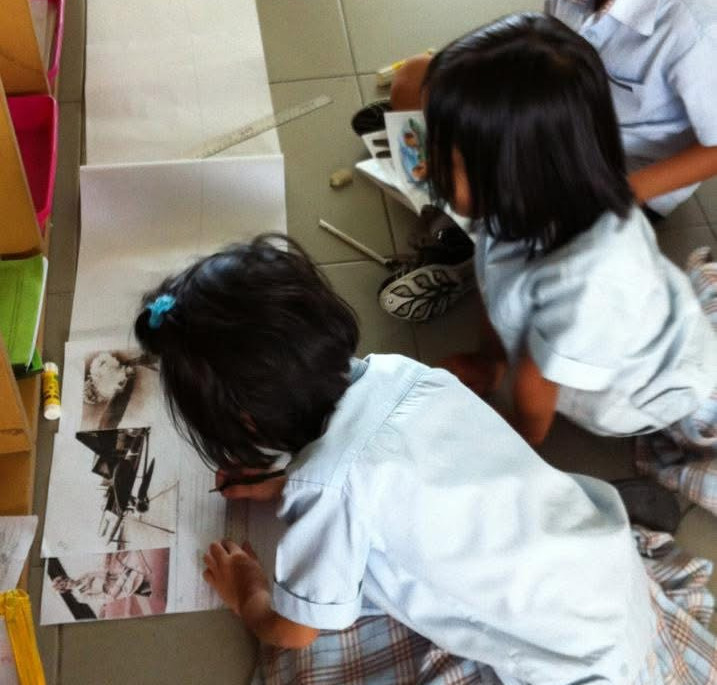
First grade students work together to develop a timeline on an aspect of the history of transportation.
Early writing focuses on letter formation, spacing, and directionality. (PK4)
Inquiry-Based Learning
Students explore complex topics through guided inquiry and research. Rather than receiving information passively, they learn to ask questions, evaluate sources, and construct understanding.
Projects may include:
Environmental science investigations
Historical research and perspective-taking
Engineering challenges and design projects
Integrated studies across subjects
This approach develops curiosity, independence, and intellectual ownership.

Contact Us
Admissions
Enrollment at The Waterford Ridge School is selective and limited. Admission is based on readiness for a structured academic environment and alignment with the school’s expectations.
Families are encouraged to begin with an admissions conversation to determine fit.
+202-550-3218